

What Is a Blonde Ale?
Your Complete Guide to This Easy-Drinking Beer Style
A blonde ale is a light, malt-forward American craft beer with a clean finish, gentle hop character, and a personality that says “everyone’s welcome here.” That’s the short answer. But if you’ve ever taken a sip of something golden and perfectly balanced. No bitterness punching you in the face, no heaviness dragging you down, just right. Then you already know this beer on instinct, even if you’ve never known it by name.
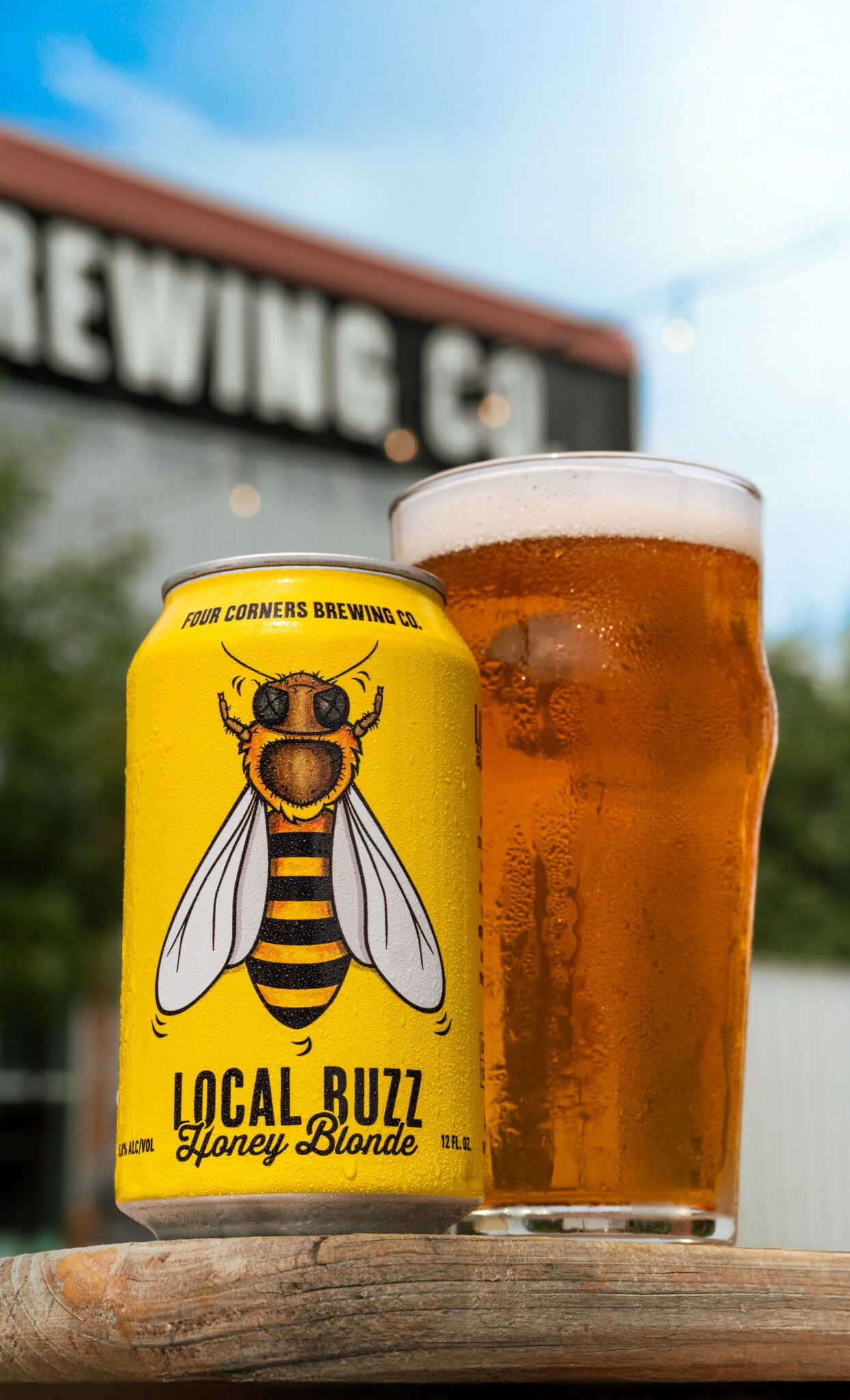
The blonde ale is the style that built the bridge between commercial beer and the craft world. It’s the first craft beer many people ever truly enjoy, and often the last one they need to convince a skeptic. It pairs with everything from tacos to brisket, works at noon and at midnight, and never once makes you work for it. In the hands of a brewery that understands its mission like Four Corners Brewing Co. in Dallas, whose Local Buzz Honey Blonde Ale has been converting people to craft since 2012. It becomes something genuinely special.
In this guide, we’re going deep. We’ll cover the history of the style, its flavor profile, the brewing process behind it, how it stacks up against other beers, the best ways to enjoy one, and, right at the heart of it all, we’ll introduce you to Local Buzz: Dallas’s own honey-kissed, rye-finished take on this beloved style.
Blonde Ale Defined: The Style That Welcomes Everyone
If you’ve ever Googled “what is a blonde ale” and ended up more confused than when you started, consider this your definitive answer. A blonde ale, sometimes called a golden ale, is an American craft beer style that occupies a beautiful middle ground in the beer landscape. It’s lighter than an American pale ale, more characterful than a standard lager, and friendlier than just about anything else in the cooler.
According to BJCP’s official Blonde Ale style guidelines, the blonde ale is classified under Category 18A: “Easy-drinking, approachable, malt-oriented American craft beer, often with interesting fruit, hop, or character malt notes. Well-balanced and clean, it is a refreshing pint without aggressive flavors.”That’s the technical definition. But what it really means is this: a blonde ale is the beer that never intimidates, never overwhelms, and always delivers.
Visually, it’s unmistakable. Pale yellow to deep gold in color, with brilliant clarity and a low-to-medium white head, a well-poured blonde ale is one of the most beautiful beers you can set on a bar. It catches light like amber glass in the afternoon sun. The Brewers Association’s CraftBeer.comnotes the color range spans straw to light amber, with clarity ranging from brilliant to a slight haze. It’s always approachable and always inviting.
The numbers tell the story of a style built for balance:
- ABV: 3.8–5.5%
- IBU: 15–28
- Color (SRM): 3–6
- Serving Temperature: 45–50°F (7–10°C)
Now these aren’t arbitrary numbers. They represent a deliberate design philosophy. The ABV keeps things sessionable, meaning you can enjoy one (or two, or three) without it sneaking up on you. The IBU range sits firmly in “gentle” territory — hops are present, but they’re playing backup, not lead guitar. And that golden SRM? Pure visual appeal.
On the palate, a blonde ale leads with soft malt sweetness. You might pick up a hint of bread, a whisper of toast, or a light biscuit note. Nothing heavy, nothing that demands your full attention. Some versions offer subtle fruity esters, while others lean clean and neutral. The finish is typically medium-dry, smooth, and refreshing. The kind of finish that quietly says “another one?”
Crucially, the blonde ale was designed with purpose. It was never meant to be a dumbed-down beer or a compromise. It was built as a bridge — a craft beer experience accessible enough for newcomers without sacrificing the quality, intention, and artistry that define the craft movement. It’s the style that says: you belong here, wherever you’re starting from.
Now that we know what a blonde ale is, let’s talk about where it came from. Because like all great things, it has a story.
From Garage to Glass: The History of the Blonde Ale
Great beer styles don’t appear out of thin air. They’re born from a moment in time, a cultural shift, a brewer’s ambition. The blonde ale is no different and its origin story is inseparable from one of the most exciting periods in American drinking culture: the craft beer renaissance of the late 20th century.
According to BJCP’s historical documentation, the blonde ale is believed to have first appeared in 1987 at Catamount Brewing Company in Vermont at the start of the American craft beer explosion. The timing was no coincidence. By the mid-1980s, a growing number of passionate beer enthusiasts were fed up with the homogeneity of mass-market American lagers. They wanted more flavor, more character, more craft, but they were also practical. They knew that the average American beer drinker hadn’t grown up with IPAs or stouts. Bold flavors were a barrier, not an invitation.
The solution? A style that could offer genuine craft quality, real ingredients, real brewing technique, real flavor without the learning curve. Something approachable. Something golden and gleaming and easy to love on the first sip. The blonde ale became that style.
It positioned itself perfectly as an entry-level craft beer. Not because it was simple or boring, but because it met drinkers where they were. It spoke the language of the lager drinker while quietly expanding their palate. One sip of a well-made blonde ale and you start noticing flavor in a way you never did with the mass-market stuff. The malts have character. The hops have personality. The finish has intention. The style planted a seed that grew into a full-blown craft beer love affair for millions of Americans.
That community-building mission resonates deeply with the story behind Four Corners Brewing Co. The Dallas-based brewery, born out of a love for the craft and a desire to share it, has lived this philosophy since day one.
“In short, we were craft beer fans that became home brewers. With a goal to turn more people on to the craft vibe, we opened a brewery in 2012.”
— Four Corners Brewing Co.
Those words aren’t just a founding statement. They’re the spiritual DNA of the blonde ale itself. Turn more people on to the craft vibe. Welcome everyone in. Don’t gate-keep. Pour good beer with pride and let the quality speak. It’s why Local Buzz was among the very first beers Four Corners ever brewed. It wasn’t an afterthought — it was a declaration of values.
The blonde ale has endured for nearly four decades precisely because this mission never goes out of style. There will always be someone experiencing their first craft beer. There will always be a cookout where not everyone wants a double IPA. There will always be a Tuesday afternoon that calls for something cold, golden, and uncomplicated. The blonde ale answers every single time.
In a way, the history of the blonde ale is the history of craft beer’s best instinct: make great beer, then make it for everyone.
Enough history, let’s talk about what actually happens when you bring a blonde ale to your lips.
Golden, Fragrant, and Smooth: The Blonde Ale Flavor Profile
Close your eyes for a second. You’ve just lifted a glass of blonde ale — pale gold, crystal clear, a thin white crown of foam at the top. Before the beer even touches your lips, something subtle and inviting floats up to meet you. That’s the aroma. And with a well-crafted blonde ale, it’s one of the most pleasant experiences in the beer world.
Let’s break it down, sense by sense.
Appearance
The visual presentation of a blonde ale is genuinely beautiful. Per CraftBeer.com’s Blonde Ale Style Guide, the color ranges from straw to light amber, with clarity ranging from brilliant to a slight haze. Most examples you’ll encounter land right in that pale-to-deep-gold range — warm, luminous, and alive in the glass. Carbonation bubbles rise in steady streams, giving the beer a lively energy that signals freshness. The head is typically low to medium — white, fine, and clean.
Aroma
The nose on a blonde ale is understated in the best possible way. You’ll catch light-to-moderate malt sweetness — think of it as the grain equivalent of fresh bread cooling on a rack. There’s often a gentle fruitiness in the background, sometimes a hint of citrus, sometimes something more tropical or floral. Hops are present but never shouting — you might detect a whisper of floral or herbal character. According to the BJCP style guidelines, citrusy, floral, fruity, and spicy hop notes are all common — none of them demanding, all of them pleasant.
Honey blonde variations — like Local Buzz — add a gorgeous additional layer here. Real Texas wildflower honey contributes a delicate floral sweetness to the aroma that elevates the entire experience. It’s not perfume-heavy or cloying. It’s subtle. Honeysuckle on a warm evening. A wildflower meadow somewhere west of Dallas.
Flavor
On the palate, the blonde ale leads with a soft malt character. There’s a gentle sweetness upfront — but it never lingers into cloying territory. BJCP notes flavors of bread, toast, biscuit, and wheat as characteristic of the style, with occasional low-color caramel or honey notes. Hop bitterness is medium-low to medium, providing structure without bite. Fruity esters are optional but welcome — they add dimension without complicating things.
The finish is the blonde ale’s signature move: clean, medium-dry, refreshing. It doesn’t overstay its welcome. It resolves gently and, almost immediately, makes you want another sip. Rye malt additions — as used in Local Buzz — bring a subtle spicy, bready edge to the finish that adds just enough complexity to make you pay attention.
Mouthfeel
Medium-light to medium body. Medium-to-high carbonation. Smooth and refreshing — never heavy, never watery. The BJCP describes it simply as “smooth without being heavy” — which is really the whole point. A blonde ale should feel easy in the mouth. Effortless. Like the beer equivalent of a long exhale.

Flavor Profile
- Appearance: Pale yellow to deep gold, brilliant clarity, white head
- Aroma: Light malt sweetness, subtle fruitiness, low floral/citrus hop notes
- Taste: Gentle malt sweetness, low-to-moderate hop bitterness, clean finish
- Mouthfeel: Medium-light body, medium-to-high carbonation, smooth and refreshing
What makes the blonde ale so endlessly appealing is exactly this quality of restraint. Every element is calibrated to support the whole rather than steal the show. The malt is there. The hops are there. The carbonation is there. But nothing overwhelms. Nothing distracts. It’s a beer in perfect harmony with itself — and with the moment you’re drinking it in.
Now that your mouth is watering, let’s pull back the curtain on how brewers actually make this magic happen.
The Art of Restraint: How Brewers Craft a Blonde Ale
There’s a popular misconception in the craft beer world that complex, bold beers take the most skill to brew. And while a triple-dry-hopped hazy IPA certainly requires technical precision, the blonde ale presents its own unique challenge — one that many experienced brewers will tell you is arguably harder: making simplicity taste extraordinary.
When you strip away the bold flavors, there’s nowhere to hide. Every ingredient has to earn its place. Every process decision matters. Let’s walk through how a blonde ale is built, from grain to glass.
The Malt Bill: Building the Foundation
The backbone of a blonde ale is its malt bill — and it’s deliberately light. Most recipes start with a base of pale malts, which provide a clean, neutral platform. Pale two-row or Pilsner malt is common, bringing a gentle grain sweetness and a light golden color. Some brewers incorporate Munich malt for added body and a touch more richness — a slight toasty depth that keeps things interesting without going amber.
BrewWiki’s Blonde Ale overview notes that blonde ales can include wheat malt or sugar adjuncts to lighten the body — up to 25% of the grist in some recipes. And for brewers chasing a distinctive edge, rye malt is a wildcard worth mentioning. Rye adds a subtle, bready spiciness to the finish — a clean kick that gives the beer personality without complexity. It’s the secret weapon in Local Buzz’s grain bill, and it makes all the difference.
Hops: The Supporting Cast
In a blonde ale, hops are the ensemble cast — not the lead. They provide structure and balance, but they never steal the scene. American or English hop varieties are most common: think Willamette, Cascade, or East Kent Goldings for subtle floral, herbal, or light citrus notes. Bittering additions keep the IBU range in check — typically between 15 and 28. Aroma hops may be used sparingly, if at all.
The craft here is in the restraint. A brewer working on a blonde ale has to resist the urge to add more. More bitterness. More dry hop. More everything. The discipline of less is what makes a great blonde ale work.
Yeast: The Invisible Architect
Yeast choice has an enormous impact on the final character of a blonde ale. According to BJCP, clean American ale yeast strains are most common — fermenting crisp and neutral, with minimal ester production. Lightly fruity English strains can be used for a touch more character. Kölsch-style yeast is another option, lending a subtle softness and delicate fruitiness that sits beautifully in the style.
The goal is always a clean fermentation profile — no off-flavors, no distractions. The yeast does its job and steps aside, letting the malt and hop balance take center stage.
The Secret Weapon: Texas Wildflower Honey
Here’s where Local Buzz diverges from the standard blonde ale playbook — and where it truly shines. Rather than letting the grain bill carry all the flavor weight, Four Corners incorporates locally sourced Texas wildflower honey into the brewing process. The honey is added during fermentation, where it contributes fermentable sugars that dry out the finish while simultaneously leaving behind a delicate floral sweetness and aromatic complexity that grain alone simply cannot replicate.
The result is a beer that feels simultaneously lighter andmore interesting than a standard blonde ale. The honey doesn’t make Local Buzz sweet — it makes it expressive. Floral. Alive. Distinctly Texan.
The full Local Buzz grain and ingredient lineup reads like a love letter to simplicity done right:
- Pale Malt — clean, light base
- Munich Malt — body and subtle richness
- Rye Malt — bready, slightly spicy finish
- Texas Wildflower Honey — floral aroma, delicate sweetness, local identity
The philosophy of blonde ale brewing mirrors Four Corners’ own founding philosophy: craft something welcoming, don’t overcomplicate it, and let the quality speak for itself. It’s the kind of beer that takes real skill to make — and makes it look effortless to drink.
Knowing how it’s made is great, but how does a blonde ale stack up against the other beers in the cooler? Buena pregunta.
How the Blonde Ale Compares to Other Beer Styles
Standing in front of a beer cooler or scanning a taproom menu can feel overwhelming when you don’t know the landscape. What’s the difference between a blonde ale and a pilsner? How does it compare to a pale ale? Is it anything like a wheat beer? These are exactly the right questions to ask, and the answers will help you understand not just the blonde ale, but the entire craft beer spectrum.

Blonde Ale vs. Pilsner or Lager
At first glance, a blonde ale and a crisp lager like Chingón Especial look remarkably similar in the glass — pale, clear, golden. But the difference is in the yeast and fermentation process. Lagers use bottom-fermenting yeast and ferment cold over a longer period, producing an exceptionally clean, neutral flavor. Blonde ales use top-fermenting ale yeast, which ferments warmer and faster, producing slightly more character — subtle malt sweetness, gentle fruitiness, a touch more body. Both are approachable, but a blonde ale offers just a bit more craft in every sip.
Blonde Ale vs. American Pale Ale
This is where the hop conversation becomes important. An American pale ale (APA) is a hoppier, more assertive beer — typically landing between 30 and 50+ IBUs, with pronounced hop aroma and flavor at the forefront. If you’ve ever tried one and thought, “this is a little much for me,” the blonde ale is your answer. It delivers real craft beer character with far less bitterness — hops are supportive, not starring. Per BJCP’s style comparison, the blonde ale has “less bitterness than an American Pale Ale” while offering “more flavor than American Lager and Cream Ale.” It’s the middle path — and for many drinkers, it’s exactly right.
Blonde Ale vs. Wheat Beer
Wheat beers — Hefeweizens, Witbiers — are wonderful but polarizing. Those pronounced banana and clove notes from the yeast, the hazy appearance, the sometimes-cloudy pour — they’re beloved by many but not universally accessible. Blonde ales are clearer, cleaner, and more neutral on the yeast character front. If wheat beers feel a little funky or exotic for your taste, a blonde ale gives you similar approachability and lightness without the flavor curveball.
Blonde Ale vs. IPA
Night and day. IPAs — like the bold, brilliant El Chingón from Four Corners (7.3% ABV, 72 IBU) — are loud, resinous, piney, and powerfully bitter. They demand your attention and reward the drinker who loves hop-forward intensity. A blonde ale is the chill, no-drama friend at the party. The IPA is loud and proud. The blonde is just… vibes. Neither is better — they serve completely different moments and moods. But when someone says “I don’t really like IPAs,” a blonde ale is almost always the perfect reply.
The blonde ale doesn’t try to be everything — it tries to be perfect for everyone. It’s the entry point that opens doors, the crowd-pleaser that works at every table, the style that quietly wins converts one sip at a time. Whether someone’s a first-time craft beer drinker or a longtime fan looking for their perfect everyday beer, the blonde ale delivers.
Now that you know what makes a blonde ale stand out from the crowd, let’s talk about how to enjoy one to the fullest.
¡Salud y Buen Provecho! How to Enjoy a Blonde Ale
Knowing what a beer is made of and knowing how to enjoy it are two different things entirely. The blonde ale, for all its simplicity, has a few serving nuances worth knowing — and a food pairing range that makes it one of the most versatile beers you can have on the table. Let’s get practical.
Serving Temperature
Serve a blonde ale between 45–50°F (7–10°C). This is cold enough to feel genuinely refreshing but warm enough that the subtle malt sweetness and floral honey notes can express themselves. Too cold and you mute the flavor. Too warm and the carbonation falls flat and the beer loses its crispness. That sweet spot around 47°F is where a honey blonde like Local Buzz really opens up.
Glassware
You don’t need anything fancy. A standard pint glass works beautifully — it shows off the brilliant golden clarity and supports a good head. A tulip glass, recommended by CraftBeer.com, concentrates the delicate aroma at the nose and lets you really appreciate the floral notes in a honey blonde. Either way, make sure your glass is clean. (Residual soap or oils kill carbonation and flatten the head faster than anything.)
Food Pairings
This is where the blonde ale truly earns its crown as the most versatile beer on the table. Its balanced flavor profile — malt-forward, gentle bitterness, clean finish — makes it exceptionally food-friendly.
- Spicy foods — Blonde ales love heat. The malt sweetness and carbonation cut through spice and provide cooling relief. Dallas BBQ, tacos al pastor, spicy chicken wings — a cold Local Buzz alongside any of these is practically mandatory.
- Grilled meats — The clean, slightly toasty malt character of a blonde ale pairs beautifully with charred proteins. Fajitas, grilled brisket, carne asada fresh off the comal — the pairing feels like it was designed specifically for Texas backyards.
- Asian dishes — Soy-based sauces, light stir-fries, sushi, pad thai — the neutral malt profile of a blonde ale doesn’t compete with delicate umami flavors. It complements them.
- Soft cheeses — Brie, Camembert, fresh mozzarella — the gentle sweetness of a blonde ale echoes the creamy, mild notes of soft cheeses without overwhelming them.
- Light desserts — Angel food cake, fruit tarts, honey-glazed pastries — for a honey blonde, these pairings are near poetic. The floral sweetness in the beer mirrors the sweetness on the plate.
The Right Occasions
Here’s the real truth about the blonde ale: it doesn’t discriminate. It shows up for Tuesday afternoons on the porch and Saturday night cookouts with equal grace. It’s the beer you crack open when your neighbor drops by unexpectedly. It’s the first beer you hand a friend who “doesn’t really drink craft.” It’s the beer you order at the Four Corners Taproom when you want something that pairs with good conversation and doesn’t ask you to think too hard.
Whether it’s a Sunday carne asada, a game day spread, a first date at the taproom, or a last-call Friday night — a blonde ale, done right, is always the right call. ¡Salud y buen provecho!
Speaking of enjoying a blonde ale done right — let’s introduce you to the one that started it all for us.
Local Buzz: Dallas’s Honey Blonde, Hecho con Orgullo
Every great brewery has that one beer — the one that tells you everything you need to know about who they are and what they believe in. For Four Corners Brewing Co., that beer is Local Buzz Honey Blonde Ale.
It wasn’t an accident. Local Buzz was among the very first beers Four Corners ever brewed — born from the same mission as the brewery itself. When a group of craft beer fans turned home brewers decided to open a brewery in Dallas in 2012 with the explicit goal of turning more people on to the craft vibe, they needed a beer that embodied that mission from the first sip. Something approachable. Something local. Something that made people feel immediately at home. Local Buzz was that beer.
The Specs
At 5.0% ABV and 20 IBU, Local Buzz sits perfectly within the blonde ale style — sessionable enough for long afternoons, flavorful enough to reward attention. The numbers are almost secondary to the experience, but they matter: this is a beer calibrated for all-day enjoyment and universal appeal.
What Makes It Different
The secret — and the soul — of Local Buzz is its Texas-sourced wildflower honey. This isn’t a marketing gimmick or a drop of honey extract added for labeling purposes. It’s real honey, sourced locally in Texas, incorporated into the brewing process in meaningful quantities. The result is a beer that carries a delicate floral aroma unlike anything you’ll find in a standard blonde ale — a whisper of wildflower meadows, an echo of the Texas Hill Country, a sweetness that’s present but never aggressive.
The grain bill beneath the honey is equally thoughtful:
- Pale Malt — a clean, light foundation that lets the honey shine
- Munich Malt — adds body and a subtle, toasty depth
- Rye Malt — delivers a clean, bready, slightly spicy finish that lifts the beer and adds dimension
Together, these ingredients create something genuinely special: a honey blonde that is simultaneously more complex and more approachable than the sum of its parts. The honey adds intrigue. The rye adds personality. The pale malt keeps everything grounded and clean.
The Vibe
Four Corners describes Local Buzz simply and perfectly: “Bright, crisp, and refreshing. Crafted for good times and great company. ¡Salud!” And that’s exactly what it delivers — every single time.
This is Vida, Well Crafted. It’s the brewery’s tagline and its philosophy all rolled into one cold, golden can. A life well lived includes good food, good people, good music, and a beer worth raising a glass to. Local Buzz is that beer.
How to Find It
Local Buzz is available year-round in 6-packs, 12-packs, and 19.2 oz single-serve cans — perfect for wherever the moment takes you. It’s also on draft at the Four Corners Taproom at 1311 S. Ervay St., Dallas, TX, where you can experience it exactly as the brewers intended: fresh, cold, and poured with pride in the heart of Dallas.
Can’t make it to the taproom? Use the Brew Finder to locate Local Buzz at a store near you. Because great beer shouldn’t be hard to find.
The “Keep Your Buzz Local” ethos runs through everything Four Corners does. When you crack open a Local Buzz, you’re not just drinking a good beer — you’re supporting a Dallas original, a community-driven brewery that has been pouring love and craft into every batch since 2012. That means something. Y ese algo sabe bien.
Life’s Too Short for Boring Beer. A Closing Toast
We’ve covered a lot of ground together. The blonde ale is one of craft beer’s most underrated achievements. It makes the complex feel effortless. It turns “I don’t really drink craft” into “okay, just one more.” It pairs with everything from street tacos to summer sunsets. And in the hands of a brewery like Four Corners — one that has always believed craft beer should be for everyone — it becomes something more than a beer style. It becomes a statement of community.
Whether you’re brand new to craft beer or you’ve been exploring the scene for years and just want a perfect everyday pour, the blonde ale delivers every single time. And Local Buzz Honey Blonde Ale is the Dallas-born, Texas-honey-kissed, rye-malt-finished version that earns its place at every table.
Life’s too short for boring beer. Crafted with love, poured with pride — that’s the vida we’re about. ¡Salud!
Ready to experience it for yourself?
Learn more about the beer on the product page.
Find Local Buzz near you with our Brew Finder :
Find it at a store close to home.
Come visit us at the Four Corners Taproom in Dallas :
Experience it fresh, on draft, right here in The Cedars.
Explore all our year-round brews :
Ready to go deeper into the lineup? ¡Órale, vamos!

Frequently Asked Questions About Blonde Ales
What is a blonde ale?
A blonde ale is a light, easy-drinking American craft beer style with a pale golden color, balanced malt sweetness, and low-to-moderate hop bitterness. According to the BJCP’s official style guidelines, ABV typically ranges from 3.8–5.5%, with IBUs between 15–28. It’s one of the most approachable craft beer styles in existence.
What does a blonde ale taste like?
Blonde ales have a clean, slightly sweet malt flavor with subtle hop bitterness. You might notice light bread, biscuit, or toast notes on the palate, and some versions — especially honey blondes — show delicate floral sweetness. The finish is smooth, medium-dry, and refreshing. According to CraftBeer.com, malt flavors of bread, toast, biscuit, and wheat are characteristic of the style.
Is a blonde ale a lager or an ale?
A blonde ale is an ale — fermented with top-fermenting ale yeast at warmer temperatures. While it can look similar to a pale lager in the glass, the yeast and fermentation process are fundamentally different, giving blonde ales slightly more malt character and subtle fruitiness. Some versions can also be fermented with lager yeast or cold-conditioned, per BJCP guidelines.
What is a honey blonde ale?
A honey blonde ale is a variation of the classic blonde ale style brewed with real honey added during the brewing process. The honey contributes fermentable sugars, a delicate floral sweetness, and a distinctive aromatic complexity that elevates the style. Local Buzz Honey Blonde Ale from Four Corners Brewing Co. is a prime example — brewed with locally sourced Texas wildflower honey for a flavor that is distinctly Texan and wholly unique.
What foods pair well with a blonde ale?
Blonde ales are among the most food-friendly beer styles available. They pair beautifully with spicy foods (tacos, BBQ, wings), grilled meats, Asian cuisine, soft cheeses like Brie, and fruit-forward desserts. Their balanced malt profile and gentle carbonation complement heat and richness without competing with delicate flavors.
How should a blonde ale be served?
Serve a blonde ale chilled between 45–50°F (7–10°C) in a standard pint glass or tulip glass, as recommended by CraftBeer.com. This temperature range preserves the subtle aromas while keeping the beer refreshingly cold and lively.
Where can I try a blonde ale in Dallas?
Head to the Four Corners Brewing Co. taproom at 1311 S. Ervay St., Dallas, TX to try Local Buzz Honey Blonde Ale on draft — or use the Brew Finder to locate it at a retail store near you. It’s available year-round in 6-packs, 12-packs, and 19.2 oz singles.