

Beer Styles Explained: From Lagers to IPAs, A Real Drinker’s Guide
You walk up to a bar. The tap list reads like a foreign language. West Coast IPA, Märzen, Hazy DIPA, Cerveza Negra, Gose, Saison, Oatmeal Stout. The bartender is waiting. You point at something. You have no idea what’s coming.
Sound familiar? You’re not alone, and honestly, nobody should feel weird about that. Beer styles explained properly could fill a library. There are hundreds of documented styles across dozens of family branches, and nobody is born knowing the difference between a Pilsner and a Helles. That knowledge gets built one cold glass at a time.
This guide is your shortcut.
We’re breaking down the major beer style families (lagers, ales, IPAs, stouts, sours, saisons) in plain language. No snobbery. No lecture. We’ll use real beers we’ve brewed right here at Four Corners to anchor each style in something you can actually taste. By the end of this, you’ll walk up to any tap list with a little más confianza.
¡Vámonos!
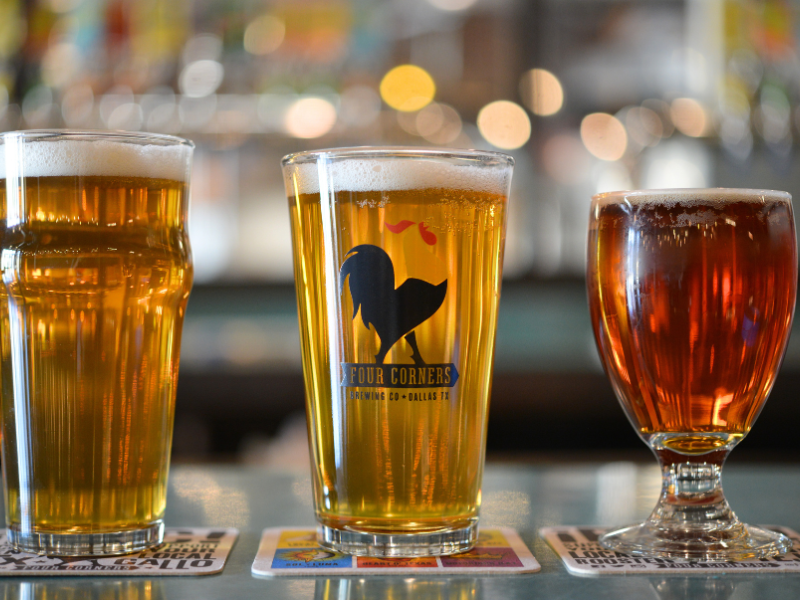
Ale vs. Lager: The One Split That Explains Everything
Before we dive into IPAs, stouts, sours, or anything else, there’s one fundamental distinction you need in your back pocket. One idea that, once you understand it, makes everything else click into place. It’s the difference between an ale and a lager, and it all comes down to yeast.
Every beer, every single one, regardless of color, flavor, or country of origin, starts with the same four ingredients: water, malted grain (almost always barley), hops, and yeast. That’s it. That’s the whole recipe. What changes everything is what kind of yeast you’re using and at what temperature you’re letting it do its work.
Ales are brewed with top-fermenting yeast (Saccharomyces cerevisiae) at warmer temperatures, generally somewhere between 60 and 75°F. Because it’s warmer, fermentation moves fast. The yeast is active and expressive, producing a wide range of esters and phenols, the chemical compounds responsible for the fruity, spicy, and complex flavor notes that define most ales. When people describe a beer as “full-flavored,” “complex,” or “fruit-forward,” they’re almost certainly talking about an ale. This category is enormous: IPAs, stouts, porters, wheat beers, blonde ales, saisons, sours, all ales.
Lagers work the other way around. They use bottom-fermenting yeast (Saccharomyces pastorianus) at cold temperatures, somewhere between 35 and 50°F. That cold fermentation is slow, deliberate, and remarkably controlled. The yeast produces far fewer of those fruity esters, which is exactly the point. The result is beer that’s clean, crisp, smooth, and neutral, qualities that make lagers extraordinarily drinkable and accessible. The word “lager” itself comes directly from the German lagern, meaning “to store.” After fermentation, lagers are conditioned, stored cold, for weeks or even months. That extra time is what gives lagers their signature clarity and clean finish.
Most beer styles you’ll ever encounter sit cleanly under one of these two umbrellas. A handful of hybrid styles, like the Texas Steam or California Common, blur the line by using lager yeast at ale temperatures, but those are the exceptions that prove the rule.
The scale of this world is genuinely staggering. According to the Brewers Association’s Beer Style Guidelines, updated annually and most recently revised in 2026, there are over 100 distinct, officially recognized beer styles across both the ale and lager families. One hundred styles. And the list keeps growing: the 2026 update added Rice Lager as a newly recognized style, reflecting the growing influence of Asian brewing traditions on American craft beer.
Two numbers will help you navigate any tap list once you understand what they mean: ABV (Alcohol By Volume, how strong the beer is) and IBU (International Bitterness Units, how bitter it is). This FCBC explainer breaks both down beautifully if you want to go deeper.
What is the difference between an ale and a lager? Ales are brewed with top-fermenting yeast at warmer temperatures, producing fuller, more complex, and often fruitier flavors. Lagers are brewed with bottom-fermenting yeast at colder temperatures, producing cleaner, crisper, and more neutral profiles.
At Four Corners, we love both sides of the family. Our lineup spans the full spectrum, from the clean, crisp craft lager simplicity of Chingón Especial to the bold, hop-forward intensity of El Chingón IPA. Both deserve a place in your glass. Let’s meet them properly.

Now that we’ve got the big split down, let’s start with the lager family, the style most Americans drink more of than any other, often without even knowing it.
Lagers: Clean, Crisp, y Bien Especial
Lagers are the most consumed beer style on earth. By a significant margin. If you’ve ever been to a backyard cookout, a ball game, a concert, or a dive bar anywhere in America and reached into an ice chest, you almost certainly grabbed a lager. That pale gold, ice-cold, fizzy beer that most people picture when they hear the word “beer”? That’s a lager. And yet, for as ubiquitous as lagers are, they’re genuinely misunderstood and frequently underestimated. Understanding the lager family means appreciating just how much craft and intention goes into achieving something that tastes effortless.
The beauty of lager is in what it doesn’t do. There’s no fruity distraction, no aggressive bitterness, no spice or funk from the yeast. A well-brewed lager lets its ingredients speak clearly (the grain, the water chemistry, the hop variety) without any noise. That restraint requires serious skill. It’s much easier to hide flaws behind a big IPA’s hop load than it is to brew a perfectly clean lager that holds up under scrutiny.
The Major Lager Substyles
The lager family branches into several distinct substyles, each with its own personality:
The American Lager is where most people start their beer journey. Light-bodied, low bitterness, high drinkability, and designed to be consumed cold and often. Mass-market brands dominate this subcategory, but craft breweries have been bringing real intention and ingredient quality to the style for years.
The Pilsner is arguably the world’s most influential beer style. It was born in 1842 in Plzeň, Czech Republic, the first golden, clear lager in a world that had only known murky, dark beers. Two main branches exist: Czech Pilsners tend to be maltier with a softer, rounded bitterness, while German Pilsners are drier with a more pronounced, spicy hop finish. When you see “Pils” on a tap list, expect something pale gold, medium-bodied, and unapologetically hop-forward by lager standards.
The Helles is Munich’s elegant answer to the Pilsner. Where a German Pilsner leans on hop bitterness, a Helles leans into malt softness: pale gold, beautifully smooth, with a gentle sweetness and a clean finish. Deeply drinkable in a way that seems almost unfair.
The Vienna Lager, Märzen, and Oktoberfest styles share a lineage. They’re amber-colored with a toasted, biscuity malt character and medium body. These are the beers of autumn, of harvest festivals, of big stone steins. Four Corners has featured a Märzen in past seasonal drops, and if you’ve ever had one, you understand why it’s built a devoted following.
The Hoppy Lager and India Pale Lager represent craft brewing’s collision of worlds, taking the clean, crisp lager canvas and painting it with IPA-level hop aromatics. It’s a growing subcategory that appeals to both lager loyalists and hop heads who want something sessionable.
The Dark Lager or Schwarzbier (“black beer” in German) is a style that challenges assumptions. It’s dark in color, nearly opaque, but surprisingly light-bodied, with roasty malt character and none of the weight that the color implies. We’ll come back to the “dark = heavy” myth in a later section.
The FCBC Take: Chingón Especial Lager
This is what a craft lager looks like. At 4.0% ABV and just 6.6 IBU, the Chingón Especial is a deluxe lager built on light hop character and a crisp, clean finish. It is, in the simplest and most honest terms, a lager you can trust completely. The fact that it clocks in at 6.6 IBU, milder in bitterness than many mass-market light beers, tells you everything about its purpose: maximum drinkability, zero compromise on quality. Proudly brewed in Texas with the finest ingredients. Born Chingón.
The Chingón Especial sits within the Four Corners year-round lineup for good reason. It’s the kind of beer that fits every season, every occasion, every mood. Hot Dallas afternoon on the patio? Chingón Especial. Pregame before the game? Chingón Especial. Long week that ended better than it started? You already know.
It also pairs beautifully with food: tacos, carne asada, spicy dishes, anything coming off a grill. Lager’s clean profile doesn’t compete with bold flavors; it complements them. That’s not an accident. It’s craft intentionality at its most useful.
Chingón Especial Lager | Style: American Craft Lager | ABV: 4.0% | IBU: 6.6 | Flavor: Crisp, clean, light hop character | Mood: Patio. Always.

Lagers are the crisp handshake of the beer world: easy to trust, always welcome, consistently delivering exactly what they promise. Now let’s talk about the style family that changed craft beer forever, and maybe changed how you think about hops: ales, pale ales, and the mighty IPA.
Pale Ales & IPAs: Where the Hops Hit Different
If lagers are the reliable friend who shows up exactly when needed, IPAs are the friend who shows up and immediately makes the whole room more interesting. The India Pale Ale is the flagship of the American craft beer renaissance, the style that more than any other transformed how this country thinks about what beer can be. Understanding IPAs means understanding the beating heart of the broader ale family.
But let’s start a step before the IPA. Let’s talk about the Pale Ale, the gateway.
A Pale Ale sits in that beautiful middle ground: moderate ABV (typically 4.5 to 6%), balanced hop and malt, approachable bitterness, and enough flavor to reward attention without demanding it. It’s the perfect introduction to hop-forward beers for anyone coming from a lager background. FCBC’s legacy Paletero (5.7% ABV, 36 IBU) is a textbook American Pale Ale: floral, refreshing, crisp flavors of pine and grapefruit that open the door to bigger, bolder hop experiences without slamming it in your face.
Where Did the IPA Come From?
The name “India Pale Ale” comes from 18th-century British brewing history. British brewers facing the logistical challenge of exporting beer to soldiers and colonists in India discovered that their standard ales weren’t surviving the long sea voyage in tropical heat. The solution was elegant: brew ales with significantly higher hop quantities. Hops have natural antimicrobial properties that acted as a preservative, keeping the beer fresher through months at sea. By the time the ships docked in India, those heavily-hopped ales had developed complex, layered flavor through the voyage. The IPA was born out of necessity and arrived as a revelation.
American craft brewers got their hands on the style in the 1970s and 80s and never looked back. They took the IPA blueprint and ran with it, experimenting with new American hop varieties, pushing bitterness and aroma further than anyone had before, and eventually splitting the style into a family of its own.
The IPA Family, Substyle by Substyle
The West Coast IPA is the original American craft take. Clear, golden to amber, assertively bitter, and defined by piney, citrusy, resinous hop character with a dry finish. This is the IPA your craft beer-loving uncle has been drinking since 2003. ABV typically runs 6 to 7.5%, and the bitterness is upfront and unapologetic. If you see a West Coast IPA on the tap list, you’re drinking American craft beer history. The FCBC Super Series has featured a West Coast IPA, honoring the style that started it all.
The New England IPA (NEIPA), also called a Hazy IPA, flipped the West Coast script in the 2010s and sparked the biggest style revolution in craft beer in decades. NEIPAs are deliberately hazy (almost orange juice-cloudy), intensely aromatic with tropical fruit and citrus, and surprisingly low in bitterness despite being loaded with hops. The magic is in when the hops are added: massive quantities thrown in late in the brewing process and during dry-hopping extract aroma and flavor without the harsh bitterness of early-addition hops. The FCBC Super Series Tropical Hazy IPA lives in this territory: juicy, lush, and built for people who want big hop flavor without the bite.
The Double or Imperial IPA (DIPA) takes everything about an IPA and amplifies it. More hops. More malt to balance the hops. More alcohol, typically 7.5% to 10%+ ABV. FCBC’s legacy El Más Chingón (9.0% ABV, 85 IBU) was a Red Wheat DIPA that made absolutely no apologies for what it was. This is not a beer for the timid. It’s a beer for the curious and the committed.
The Session IPA takes the opposite approach: all the hop aroma and flavor you love from an IPA, but dialed back to under 5% ABV so you can keep the party going longer. Best of both worlds for hop heads who want to drink responsibly without sacrificing flavor.
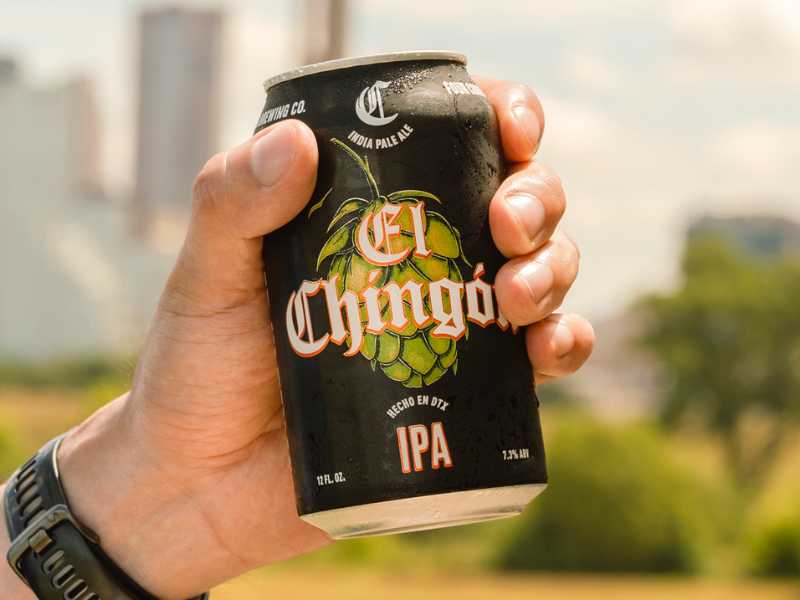
The FCBC Star: El Chingón IPA
Seven hops. One legendary IPA.
El Chingón is built on a chingo-blend of seven classic “C” hops (Columbus, Cascade, Centennial, Chinook, Citra, Cluster, and Crystal) with Columbus, Cascade, and Centennial driving the boil, and Falconer’s Flight’s 7C blend delivering the final aromatic punch. A Munich malt backbone brings balance and body. Then it’s dry-hopped for intense aromatic depth that hits your nose before the glass reaches your lips.
At 7.3% ABV and 72 IBU, El Chingón is bold. Assertive. Definitively an IPA. To put that 72 IBU in perspective: most mass-market light beers sit under 15 IBU. This beer is more than four times as bitter as the beer in the cooler at your grocery store checkout. But here’s what non-IPA drinkers often discover when they actually try one: bitterness, done right, isn’t punishment. It’s balance. The Munich malt backbone keeps El Chingón from tipping into harsh territory, leaving you with something that’s full, hoppy, complex, and honestly, completely addictive.
“Ready to crank up your chingón factor? ¡Órale, let’s go!” (Four Corners Brewing Co.)
And if you’ve ever wondered whether craft beer is just about big, intimidating IPAs, it isn’t. El Chingón is a centerpiece, not a requirement. The whole FCBC lineup is proof that craft beer has room for every palate.
What is an IPA beer? An India Pale Ale (IPA) is a hop-forward ale style characterized by strong hop bitterness, aroma, and flavor. Substyles range from clear and bitter (West Coast IPA) to hazy and juicy (New England IPA) to massive and complex (Double/Imperial IPA).
IPAs and pale ales live in the bold, aromatic end of the spectrum, but the ale family has a softer, lighter side that’s just as worth knowing. Next up: blonde ales, wheat beers, and the sessionable styles that prove craft beer doesn’t have to knock you sideways.
Blonde Ales, Wheat Beers & the Art of the Sessionable Style
Not every great beer announces itself. Some of the best craft beers in the world are the ones you barely notice finishing. The glass just somehow ends up empty, and all you know is that you want another. That’s the gift of the sessionable ale: the lighter, brighter, more approachable end of the ale family, built not for intensity but for longevity. For the long afternoon. The patio hang that turns into dinner. The after-work Tuesday that turns into a genuinely good evening.
The lighter ale styles are among the most universally loved in craft beer, and yet they don’t get nearly enough credit. Because they’re not bold, they’re sometimes dismissed as “boring.” That’s a profound misread. Brewing a blonde ale or a honey ale that’s truly excellent (clean, balanced, flavorful without being heavy, refreshing without being empty) requires as much craft as any IPA. It’s just a different kind of mastery.
Blonde & Golden Ales: The Welcome Mat of Craft Beer
The Blonde Ale (sometimes called a Golden Ale) is the classic gateway style. Pale gold in color, light to medium in body, low in bitterness, and clean in flavor. This is the style that has converted more lager drinkers to craft beer than probably any other. ABV typically runs 4.5 to 5.5%. Approachable, versatile, and friendly to pretty much any food pairing you throw at it.
The Honey Ale is a blonde or golden ale elevated with the addition of local honey, either added before fermentation (where it contributes fermentable sugars that boost ABV slightly) or after (where it contributes more residual sweetness and aroma). Here’s the part that surprises most people: honey ferments out almost completely, meaning it doesn’t make the beer sweet in the way you’d expect. What it does leave behind is a subtle floral aroma, a delicate character on the palate, and, when that honey is locally sourced, a sense of place that mass-produced beer simply cannot replicate.
Wheat Beers: A Style for Every Season
The American Wheat Beer sits in bright, light, slightly hazy territory: gentle bready or citrusy notes, low bitterness, easy drinking. It’s often served with a citrus wedge, though purists will debate the merits of that practice loudly and often.
The Hefeweizen is the German standard-bearer of the wheat family, and one of the most recognizable beers in the world. Unfiltered and hazy, it delivers distinctive banana and clove flavors, not from any fruit or spice being added to the recipe, but entirely from the expressive German wheat yeast strains used in fermentation. Esters (from yeast) produce the banana note; phenols produce the clove. It’s fermentation chemistry creating something that smells like a tropical kitchen, and it’s wonderful.
The Kölsch-Style Ale occupies a fascinating hybrid position: technically an ale (fermented warm), but cold-conditioned like a lager. The result is something clean and subtle, with just a whisper of fruitiness and exceptional drinkability. Originating from Cologne, Germany, a true Kölsch is traditionally served in a tiny cylindrical glass called a Stange, never a pint. At American craft breweries, Kölsch-style ales are a warm-weather staple for exactly the right reasons. According to CraftBeer.com’s guide to session beers, the Kölsch consistently ranks among the most sessionable styles in the craft world.
The FCBC Flagship: Local Buzz Honey Blonde Ale
Local Buzz is a Texas original. One of Four Corners’ flagship brews, a beer that’s been winning over craft newcomers and beer veterans alike since the early days of the brewery. At 5.0% ABV and just 20 IBU, it’s built precisely for the kind of drinking that lasts longer than one glass.
The recipe is a thoughtful layering of ingredients: a smooth pale malt base, a touch of Munich malt for body, a hint of rye for a clean, bready, slightly spicy finish, and, the defining touch, locally sourced Texas honey that lends a delicate floral sweetness and aroma that sets Local Buzz apart from every other honey blonde ale you’ve ever had. That honey isn’t a gimmick. It’s a connection to Texas, to the land, the local producers, and the community that Four Corners was built to serve.
At 20 IBU, the bitterness is gentle enough to welcome anyone who’s ever thought craft beer was too intense. But there’s real depth here: the rye finish, the floral honey note, the clean malt backbone. It’s not complex in the way an IPA is complex. It’s refreshing in the way a perfect summer afternoon is refreshing: effortlessly, completely, memorably.
Local Buzz Honey Blonde | Style: Honey Blonde Ale | ABV: 5.0% | IBU: 20 | Flavor: Crisp, floral, touch of sweetness, zesty rye finish | Mood: Patio. Texas sunset. Good company.
This section is for anyone who’s ever felt like craft beer wasn’t for them. Local Buzz says: this one’s for you. It’s an open door. No bitterness required. If you’ve been curious about whether craft can be approachable and light, this beer answers the question in the first sip.

Blondes, wheats, and honey ales are the sunny afternoon of beer styles: light, easy, and always welcome. Now let’s walk to the other end of the spectrum and talk about the beers that embrace darkness: stouts, porters, and the roasty styles that are far deeper than they look.
Stouts, Porters & Dark Beers: Don’t Judge a Beer by Its Color
Here’s the single biggest myth in all of beer: dark beer is heavy. Dark beer is strong. Dark beer is not for me.
Wrong on all counts. Let us fix that right now.
Color in beer comes from malt, specifically from how long and how hot that malt was roasted during the kilning process. The darker the roast, the darker the beer. A chocolate malt produces rich brown tones and coffee-like flavors. A black malt goes further, producing nearly opaque beer with intense roastiness. But here’s the critical part that the myth gets wrong: roast level determines color and flavor. It has almost nothing to do with body, weight, or alcohol content.
A Schwarzbier (German dark lager) can be lighter on the palate than a Hefeweizen. A dry Irish Stout can have a lower ABV than a West Coast IPA. An Oatmeal Stout can be silky-smooth and medium-bodied, deeply pleasant rather than overwhelming. Color tells you about roast character. It does not tell you how much of the beer you can drink. And roast character, it turns out, is one of the most pleasurable things a beer can offer.
Porters: The Ancestor of Modern Dark Beer
The Porter is one of Britain’s oldest and most storied beer styles. Dark brown, rich with chocolate and caramel malt flavors, moderate bitterness, and a smoothness that made it the most popular beer in London for much of the 18th and early 19th centuries. Dockworkers, street vendors, and laborers all reached for the Porter. It was the working beer of its era, and it earned that reputation by being reliably excellent.
FCBC’s legacy Block Party Robust Porter (5.7% ABV, 40 IBU) carried that tradition forward with a description that says it all: “smooth and chocolaty.” A Robust Porter pushes the malt character further than a standard Porter (more chocolate, more roast, more depth) while keeping the body and bitterness in check. This is a beer you drink thoughtfully, and it rewards the attention.
Stouts: The Porter’s Bold Evolution
The Stout evolved directly from the Porter, and the line between them has blurred over centuries. Today, stouts come in several distinct forms:
The Dry or Irish Stout is the style most people associate with the word “stout.” Think Guinness. Dark, roasty, surprisingly light-bodied with a dry, coffee-forward bitterness. Lower ABV than you’d expect. This is the style that most converts dark beer skeptics because it proves, immediately, that dark doesn’t mean heavy.
The Oatmeal Stout adds rolled oats to the grain bill, and those oats transform the texture of the beer. Oats contribute smooth, silky mouthfeel and a rounded, gentle body. The result is something that drinks more like a dessert than a challenge. FCBC’s legacy Notorious O.A.T. (7.1% ABV, 38 IBU) is the perfect demonstration: “a bold and beautiful oatmeal stout, flaked oats add cool silkiness to this roasty and delicious brew.” Named in homage to the Notorious B.I.G., it carries the same effortless cool. Something that sounds big and intimidating and then just… flows. Smoothly. Perfectly.
The Milk Stout uses lactose, an unfermentable milk sugar, to add genuine sweetness and a creamy, full body. The lactose doesn’t ferment out the way regular sugars do, so it stays in the finished beer as sweetness and texture. The result is rich, dessert-like, and deeply satisfying.
The Imperial or Russian Imperial Stout is where the category goes to its most extreme conclusion: massive ABV (often 8 to 12%+), intense hop bitterness to balance enormous malt character, and a complexity that rivals aged wine or whiskey. This is a beer you sip slowly, ideally by a fire in November.
Cerveza Negra: A Distinctly Latin American Tradition
The cerveza negra occupies its own proud corner of the dark beer world. Lighter-bodied than a stout but with roasty, smooth character and a drinkability that makes it far more approachable than its dark appearance suggests. FCBC’s legacy La Lechuza (7.6% ABV, 20 IBU) is the brewery’s own take on this tradition: roasty flavors, a hint of cinnamon, and bready graham cracker character, all wrapped in South Texas folklore. La Lechuza is the mythical figure of Mexican-American legend, and this beer carries that mystery and depth in every pour.
Brown Ales: The Neighborhood Brew
The Brown Ale sits in warm, nutty, malt-forward territory: moderate bitterness, medium body, and the kind of easy approachability that makes it a perennial favorite. FCBC’s legacy La Bajada (5.0% ABV, 25 IBU) honors the barrio where Four Corners first set up shop, named for the neighborhood, built for the community. It’s the original neighborhood brew in every sense.
According to Wine Enthusiast’s beer styles guide, dark beers consistently rank among the most food-friendly styles in the entire category, pairing exceptionally well with rich, smoky, and sweet foods. BBQ brisket, coffee-rubbed meats, chocolate desserts. Dark beer belongs at the Texas table. Explore all of FCBC’s legacy dark brews to see how the brewery has explored this rich territory.
🚫 Myth: “Dark beer is always heavy and boozy.”
✅ Reality: Color = roast flavor. An Oatmeal Stout can be silky and smooth. A Schwarzbier can be lighter on the palate than a wheat beer. Dark just means delicious.
“A bold and beautiful oatmeal stout inspired by the smoothness of ‘Biggie’ himself.” (Four Corners Brewing Co., on Notorious O.A.T.)
Dark beers bring roast, richness, and depth that few other styles can match. But there’s one more corner of the beer world that plays by entirely different rules, where sourness replaces bitterness, wild yeast gets involved, and the results can taste like fruit, wine, or something you’ve genuinely never experienced before. Welcome to the wild side.
Sours, Saisons & the Wild Frontier of Funky Beer
This is the section where the tour guide gets a little more animated. Because this is the stuff that makes craft beer genuinely exciting: the part of the beer map where the rules change, the flavors get strange and wonderful, and the only real entry requirement is curiosity.
Sour beers and farmhouse ales represent craft brewing at its most adventurous. They’re the styles that make wine lovers lean in, that surprise cocktail drinkers who thought they didn’t like beer, that convert skeptics in a single sip. They’re also the styles most likely to be completely misunderstood before they’re tasted. So let’s change that.
What Makes a Beer Sour?
The acidity in sour beer doesn’t come from hops or malt. It comes from specific bacteria and wild yeast strains introduced during brewing. The primary bacteria responsible are Lactobacillus and Pediococcus, both of which produce lactic acid. The wild yeast Brettanomyces (affectionately called “Brett” in the brewing world) adds additional funky, earthy, leather, or tropical fruit notes that sit outside what conventional brewing yeast can produce. Together, these organisms create flavor profiles that have no equivalent in any other beer style.
Sour Styles: From Light and Refreshing to Wild and Complex
The Berliner Weisse is your gateway sour: a tart, low-ABV German wheat beer that’s bright, effervescent, and refreshing enough to drink in midsummer heat. Traditionally served with flavored fruit syrups (raspberry or woodruff are classic), it’s the most accessible sour style for newcomers. Think lemonade crossed with wheat beer, and you’re in the neighborhood.
The Gose (pronounced “go-zuh”) is a German sour wheat style with two unusual additions: salt and coriander. A small amount of salt heightens the perception of other flavors and adds a mineral quality that makes the Gose almost impossible to stop drinking in hot weather. It’s tangy, slightly salty, gently herbal, and wildly refreshing. One of the most summer-appropriate beers ever conceived.
The Lambic and Gueuze styles come from the Pajottenland region of Belgium, where brewers have been fermenting beer with ambient wild yeast for centuries, literally leaving the wort open to the air and letting whatever microorganisms drift in to do the fermentation. The resulting beers are complex, funky, wine-like, and occasionally challenging, but Gueuze (a blend of old and young Lambics) is considered one of the most sophisticated and remarkable beverages produced anywhere in the world. According to the Brewers Association Beer Style Guidelines, wild ales and spontaneous fermentation styles have their own dedicated classification, reflecting how seriously the brewing community takes this category.
The Kettle Sour is the modern craft solution to the time-consuming traditional sour process. By intentionally souring the wort before boiling, introducing Lactobacillus at a specific temperature for a controlled period, brewers can produce a clean, consistent lactic acidity in a fraction of the time. Most of the fruit sours you see on tap lists today are kettle sours: bright, fruity, tart, and enormously approachable.
The American Wild Ale is the wild west (pun intended) of the sour category: a broad classification for beers fermented with wild or non-conventional microorganisms, aged in barrels, or blended in unconventional ways. The results range from funky and earthy to bright and tropical, and no two breweries produce quite the same thing.
Saisons: The Farmhouse Classic
The Saison (French for “season”) has one of the most evocative origin stories in beer history. Traditionally brewed in winter by Belgian and French farmers in a region called Hainaut, and stored until summer, when the farm’s seasonal workers (the saisonniers) would drink it during harvest. It needed to be refreshing, low enough in alcohol to keep workers functional, and stable enough to survive months of storage. The result was a style defined by dryness, effervescence, a fruity and spicy yeast character, and a complexity that belied its humble origins.
Modern saisons range from 4 to 9% ABV and embrace the original spirit of farmhouse creativity. Brewers often add local herbs, fruits, spices, and adjuncts that reflect the ingredients available to them. The yeast character (often using Belgian strains that produce phenolic, spicy, and fruity notes) is central to every good saison.
The FCBC Saison Story
Four Corners has explored this territory beautifully through its legacy brew program. El Super Bee (8.0% ABV, 23 IBU) used French Saison yeast and Texas-sourced honey to produce a beer that was effervescent, citrusy, spicy, and distinctly Texan in its local ingredient sourcing. “With every sip, unleash a high-flying smack of citrus and spice.” That’s a saison with a Texas accent, and it’s exactly what Four Corners does best.
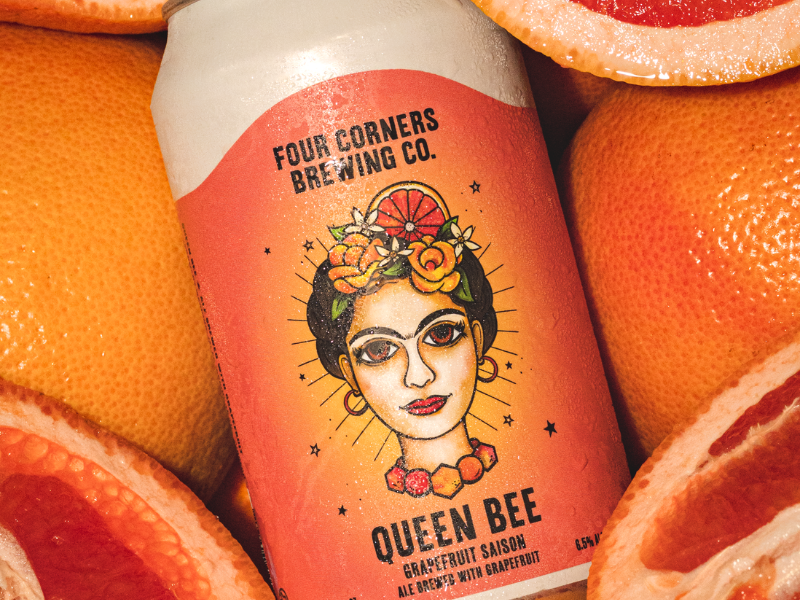
Queen Bee (6.5% ABV) adds a natural, citrusy twist to EL SUPER BEE. Brewed with Texas honey, French saison yeast, and a hint of rye malt. Juicy grapefruit brings zesty sweetness and a smooth, sun-kissed Texas finish.
Mango Fresca (5.0% ABV, 20 IBU) rounded out the fruit-forward ale space: tropical mango notes on the nose, bright and lingering fruit flavor throughout, built for the kind of warm Texas evening that refuses to admit summer is ever going to end.
New to sours? Start here:
🍋 Like lemonade? → Try a Berliner Weisse
🧃 Like kombucha? → Try a Gose
🍊 Like fruit cocktails? → Try a Kettle Sour or Fruited Ale
🍷 Like wine? → Try a Lambic or Gueuze
What is a sour beer? A sour beer is intentionally brewed to be tart or acidic, using specific lactic acid bacteria or wild yeast strains like Brettanomyces. Styles range from light and refreshing (Berliner Weisse, Gose) to funky and complex (Lambic, American Wild Ale).
These styles tend to live in the limited and seasonal space of craft brewing, and that’s exactly where to look for them. FCBC’s Special Releases and Beer Drops are where the most adventurous brewing happens. It’s the place where seasonal ingredients meet creative fermentation and the results show up in limited quantities that reward the people who are paying attention.
You’ve now traveled the full map, from the crispest lager to the wildest sour. All that’s left is knowing how to put this knowledge to work the next time you’re standing in front of a tap list.
Every Style Has a Moment: Find Yours
You’ve covered the full map of beer styles, from the clean simplicity of a lager to the wild complexity of a sour, with stops at IPAs, stouts, wheats, blondes, and saisons along the way. And here’s the thing: none of this was meant to make beer feel more complicated. It was meant to make it feel more yours.
Knowing that El Chingón’s 72 IBUs come from seven carefully chosen hops doesn’t make you a beer snob. It makes you someone who can walk up to a tap list and say, “sí, I know exactly what I’m in the mood for today.”
That’s the whole point of understanding beer styles. Not to judge what’s in anyone else’s glass, but to find more confidence in what ends up in yours. The more styles you know, the more moments you can match. A lager for the patio. A honey blonde for the first sip with a stranger that turns into a conversation. An IPA for the night you want something with personality. A stout for the quiet evening when you want something that rewards patience. A sour for the moment you want to taste something completely new.
Every style covered in this guide has been part of the Four Corners story in one way or another. From the Chingón Especial’s crisp, clean lager simplicity to El Super Bee’s honey-and-citrus saison complexity, we’ve always believed that the best beer is the one that fits the moment. And the more moments you can match, the richer every glass becomes.
¡Salud a todos!

Come Find Your Style at Four Corners
You’ve done the reading. Now comes the fun part.
The Four Corners Taproom is the real-world classroom, the place where all of this comes to life in actual pints, poured fresh, by the people who make them. Come try a flight. Start with the Chingón Especial if you love lagers. Grab the Local Buzz if you want the easy, floral blonde. Order the El Chingón IPA when you’re ready to go full hop head. Let the tap list surprise you.
📍 The Four Corners Taproom | 1311 S. Ervay St., Dallas, TX 75215
🕒 Hours: Tue–Wed 3pm–10pm | Thu–Sat 11am–11pm | Sun 11am–8pm
Can’t make it to the taproom? Use the Brew Finder to locate FCBC beers near you: in stores, restaurants, and bars across Dallas and beyond. The full year-round and special release lineup is always worth exploring to see what styles are currently available and what’s dropping next.
Sign up for the newsletter to stay up on new Beer Drops, taproom events, y todo chingón. Beer knowledge + cold cans + good vibes. That’s the Four Corners newsletter.
And when you find your style, when you take that first sip of something and think, “sí, this is it,” tag us. #FCBREWING | @FCBREWING
Whether you’re a lager loyalist or a sour-curious adventurer, there’s always a cold one with your name on it at Four Corners.
Vida, Well Crafted.