

The Lager Renaissance Is Here: What Is a Helles Lager and Why Your Bar Should Be Pouring One
Órale – lagers are back. Not the watered-down, forgettable kind that you chug at a stadium and immediately forget. We’re talking about craft lagers. Clean, intentional, brilliantly made lagers that have been quietly perfected over more than a century and are now, finally, having their well-deserved moment in the American craft beer spotlight.
For the better part of a decade, IPAs ruled the tap. Bold, bitter, hop-forward beasts that demanded your full attention and punished the uninitiated. And look – IPAs are great. We love them. But something is shifting in the culture, and if you’re paying attention to what’s happening in taprooms, on tap lists, and in coolers from Dallas to Denver, you already feel it. Drinkers are leaning toward approachability. They’re ordering beers they can have two – or three – of. They want quality without the intensity. They want to stay at the bar longer without feeling wrecked by pour number one.
Enter the Helles lager: a Bavarian original that’s been quietly perfect since 1894 and is now at the center of one of the most exciting movements in modern craft beer.
This blog is for two kinds of people. If you’re a craft beer enthusiast who’s been curious about the style – what it is, what it tastes like, how it compares to everything else in the cooler – you’re about to get the full picture. And if you’re a bar owner, restaurant operator, or beverage buyer who’s thinking about what to put on tap in 2026, you’re about to see exactly why a craft Helles lager might be the smartest pour you add to your program this year.
By the end of this, you’ll know what a Helles lager is, why it tastes the way it does, how it compares to every other pale beer on the market, and why the data is telling bar programs to make room for one. We’ll also introduce you to Four Corners Brewing Co. – a Dallas original, Latino-owned, community-driven brewery since 2012 – and the craft lager they’ve built for exactly this moment.
¿Listo? Let’s go.

The Lager Renaissance: Why 2026 Is the Year of Craft Lager
Here’s the thing about trends in craft beer: the best ones don’t feel like trends. They feel like corrections. And what’s happening with craft lagers right now is exactly that – a correction. A long-overdue recognition that clean, perfectly executed, sessionable beer is not a consolation prize. It’s the standard of excellence.
For over a decade, the craft beer narrative was dominated by intensity. Double IPAs with triple-digit IBUs. Imperial stouts clocking in at 12% ABV. Sour ales that made your eyes water. These beers are genuine achievements – technically complex, boldly creative, and beloved by a dedicated audience. But they also built an implicit culture of escalation. More hops. More ABV. More exotic adjuncts. Louder, bigger, stranger.
And then, quietly but unmistakably, the pendulum started to swing back.
Y’all, the numbers don’t lie. According to Craft Beer Trends 2026 from BirrUp, craft lagers have matured into a premium category in their own right, with consumers increasingly favoring crisp, refreshing profiles executed to perfection. Industry analysts are calling it the “Great Re-Balancing” – a fundamental shift in what drinkers actually want from their craft beer experience. The data shows consumers seeking drinkability and value rather than novelty and intensity. This isn’t a niche preference. It’s a market-wide realignment.
The economic context matters here, too. As consumers face real-world financial pressures, there’s a natural pull toward beers that offer genuine quality and satisfaction without demanding a premium adventure experience every single sip. A great Helles lager delivers exceptional craft in an accessible package. That proposition is resonating loudly in 2026.
“Craft lagers have matured into a premium category – consumers are seeking drinkability and value rather than novelty and intensity. This is the Great Re-Balancing.”
- BirrUp, Craft Beer Trends 2026
What makes this renaissance particularly significant is the investment breweries are making to support it. Brewing a great lager is technically harder than brewing most ales. Lagers require cold fermentation temperatures, extended lagering periods, and an obsessive attention to ingredient quality – because there’s nowhere to hide. No aggressive dry-hop to mask a flaw. No residual sweetness to cover off-flavors. A great lager is brutally honest. And the fact that craft breweries are investing in specialized lagering equipment – horizontal lagering tanks, precise temperature control systems, decoction mash capability – signals that this movement has real conviction behind it. This isn’t a gimmick. This is craft brewing taking lagers seriously, the way Munich has for 130 years.
The broader beer industry trends report from BirrUpreinforces this: the lager boom is one of the defining stories of 2026, driven by both consumer demand and strategic brewery positioning. And Forbes’ analysis of craft beer’s cyclical resilience frames it perfectly – the industry’s pivot to lagers isn’t reactive panic. It’s the kind of strategic, sustainable evolution that keeps a category vital over decades.
For bar programs specifically, this shift creates a real opportunity. Operators who curate tap lists with sessionable, crowd-pleasing options aren’t just following trends – they’re driving higher pour counts, longer visits, and broader appeal. A tap list that speaks only to the IPA devotee is leaving money on the table. As community-driven breweries like Four Corners Brewing Co. are showing through their work shaping Texas craft beer culture, the most resonant beers are the ones that bring people together – not the ones that test them.
Now that we’ve established why this moment is happening, it’s time to zoom in on the specific style at the center of it all.
What Is a Helles Lager? The Bavarian Classic, Explained
Let’s start with the basics and build from there, because the Helles lager is one of those styles that rewards understanding. The more you know about it, the more you appreciate what’s in your glass – and the better you can talk about it with your guests or your staff.
A helles lager – sometimes written as “helles beer” or simply “Helles” – is a traditional German pale lager that originated in Munich in the late 19th century. The word “Helles” translates from German as “bright” or “pale,” which is literally a reference to the beer’s appearance: a luminous, straw-to-pale-gold color that catches light like liquid gold in the glass.
The origin story is worth knowing, because it tells you something important about the style’s DNA. By the 1890s, Czech Pilsners were taking Europe by storm. Light in color, crisp, slightly hoppy – they were revolutionary at a time when most beers were darker and heavier. Munich’s legendary Spaten Brewery – one of the great brewing institutions of the world – watched the Pilsner wave roll across the continent and decided to respond on their own terms. In 1894, they released the first commercial Helles: a pale lager that matched the Pilsner’s brightness and approachability but leaned into Munich’s malt-forward brewing tradition rather than the Czech hop-forward style. According to detailed accounts of the style’s development, it was an immediate statement of Bavarian brewing identity – we can brew light and bright, and we’re going to do it our way.
That philosophy – malt first, hops in support – has defined the Munich Helles ever since.

The cultural context is as important as the brewing context. In Munich, the Helles isn’t special-occasion beer. It’s the beer. The everyday standard. The one poured in the massive Biergartens under chestnut trees, served by the liter to workers, tourists, and locals alike. It’s the beer that anchors one of the most robust beer-drinking cultures on earth – not because it’s flashy, but because it’s right. It hits every note it needs to hit, session after session, without ever asking anything demanding of the person drinking it.
That’s harder to achieve than it sounds.
Here’s a quick reference for the style specs – essential knowledge for any bar buyer or enthusiast who wants the shorthand:
- ABV: 4.7-5.4% – sessionable by design, built for extended enjoyment
- IBU: 10-20 – low bitterness, malt is the clear leader
- Color: Pale gold to straw (SRM 3-5) – brilliantly clear, stunning in the glass
- Serving Temperature: 38-48°F – cold enough to be refreshing, not so cold it kills the flavor
- Yeast: Clean lager yeast, fermented cold to eliminate fruity esters
- Hops: Noble varieties – Hallertauer, Tettnanger, Saaz – used for balance, not aggression
According to the Munich Helles style guide at Legends of Beer, the defining characteristic of a well-brewed Helles is the “balance and drinkability, with a clean and refreshing finish.” That’s not a lowered bar – that’s an incredibly high standard executed with restraint. Anyone can make a beer complex. Making a beer that’s perfectly balanced and endlessly drinkable is a different kind of mastery.
What distinguishes a Helles from other pale lagers is its malt character. The grain bill is primarily Pilsner malt, which provides the light color and clean foundation. Some Munich malts may be added for a touch of depth and sweetness. The hops – those noble German and Czech varieties – are used sparingly, contributing a gentle floral or herbal note that whispers in the background rather than shouting for attention. Everything in a Helles is in service of the whole, not fighting for solo billing.
If you’ve read our guide to what a blonde ale is, think of a Helles as the lager cousin with the same easygoing energy – but with the crisp, polished finish that only cold conditioning and lager yeast can deliver. Where a blonde ale might carry a hint of fruity ester character from its ale fermentation, a Helles is deliberately clean. Almost minerally in its clarity. That’s the lager difference.
The section just gave you the full definition – now let’s get sensory. What does a Helles lager actually taste like?
Golden, Soft, and Alive: The Helles Lager Flavor and Aroma Profile
There’s a moment – right after the first sip of a well-made Helles – where everything just settles. It’s not dramatic. It doesn’t announce itself. It simply is. And that’s exactly the point.
Let’s walk through the full sensory experience, because understanding what you’re tasting makes you a better host, a more confident buyer, and a more satisfied drinker.
Appearance is where the Helles makes its first impression, and it’s a memorable one. Pour it right and you get a beer that ranges from pale straw to soft gold – brilliant in clarity, no haziness, no cloudiness. The foam is white and creamy, with moderate persistence. When backlit, a Helles glows. It’s one of the most visually stunning beers in the entire spectrum, which is remarkable for a style that doesn’t use any smoke-and-mirrors brewing tricks to get there. According to the Legends of Beer Helles style guide, that “bright and clear” appearance with its “creamy white head” is a core characteristic – a sign that the brewing was done right.
Aroma is gentle and inviting. Lead your nose in and you’ll find fresh bread – the kind of warm, grain-forward scent you get from good Pilsner malt done well. There’s often a whisper of honey, a softness that’s neither sweet nor aggressive. The hop aroma from those noble varieties (Hallertau, Tettnanger, Saaz) is subtle and elegant: a faint floral note, maybe a touch of herbal depth. What you won’t find is pungency, tropical fruit, pine resin, or anything that demands a reaction. The aroma is an invitation, not a challenge.
Flavor is where the magic happens. The first sip is gentle. Bready. Like warm grain in good sunlight. There’s a soft malt sweetness that leads the palate – not cloying, not heavy, just present and satisfying. Then comes a slight sweetness that resolves cleanly into a gentle hop bitterness – low to moderate, entirely supportive. The finish is clean and slightly dry, with a refreshing quality that makes you want the next sip before you’ve even finished thinking about the current one. As BeerAdvocate’s style profile confirms, the hallmark of a great helles beer is that clean, balanced palate – nothing over-the-top, nothing missing.
Mouthfeel completes the picture. Medium-bodied – not thin like a light lager, not weighty like a Märzen. Moderate carbonation that keeps it lively without being spritzy. And then there’s the texture: silky. That’s the word. The cold conditioning process – the extended lagering at near-freezing temperatures – is what gives Helles its characteristic polish. Every rough edge gets rounded off. Every potential off-note gets cleaned up. What remains is pure, smooth, and impeccably calibrated.
For bar staff who need simple, confident descriptors to use with guests, here’s the cheat sheet:
- Appearance: Pale gold, brilliantly clear, creamy white head
- Aroma: Fresh bread, light grain, subtle floral hop note
- Flavor: Soft malt sweetness, low bitterness, clean dry finish
- Mouthfeel: Medium body, moderate carbonation, silky smooth
- Key words: Clean. Crisp. Refreshing. Approachable. Sessionable.
The contrast with IPA culture is worth naming directly, because a lot of your guests will be coming from that world. Where an IPA demands your attention – hits you with bitterness, aroma, heat – a Helles invites it. It’s a beer that lets the conversation keep going. It doesn’t interrupt. It accompanies. And in a social setting, that’s not a weakness. That’s a superpower.
If you want the loud, bold end of the spectrum, check out our El Chingón deep-dive. The Helles lager is the other end of that conversation – and every great beer program needs both.
Now that we’ve covered what a Helles tastes like, the natural next question is: how does it compare to everything else golden and pale in the cooler?
Helles vs. Pilsner vs. American Light Lager: Know What You’re Pouring
This is the comparison question that matters most – for your staff, for your guests, and for your buying decisions. All three are pale, golden, lager-style beers. All three will come up in the same conversation. Knowing the distinctions cold means you can sell each one with confidence and build a program that makes sense.
Helles vs. Pilsner
Both are pale lagers with brilliant clarity and a clean, refreshing profile. The key difference is where the balance tips. A Pilsner – whether Czech or German in tradition – leads with hops. More bitterness, a drier, crisper finish, and a more assertive overall character. Czech Pilsners especially (think Pilsner Urquell as the archetype) have a pronounced hop presence that gives them an almost spicy edge. German Pilsners are slightly softer but still hop-forward compared to a Helles.
A Helles, by contrast, leads with malt. The hops are there – they’re essential – but they play a supporting role. The result is a softer, rounder, gentler beer. Less demanding. More of a background presence. As the Legends of Beer style guide notes, Helles was developed as a milder alternative to the Pilsner – a Bavarian answer that sacrificed hop intensity in favor of malt warmth.
Neither is better. They serve different moments and different palates. A hop-curious drinker will gravitate toward the Pilsner. Someone who wants maximum sessionability and approachability will find their home in the Helles.
Helles vs. American Light Lager
This is the comparison that matters most for bar buyers because it’s the one guests make automatically. When someone says “give me something light and easy,” they’re probably thinking of a mass-market American light lager – the category dominated by Bud Light, Coors Light, and Miller Lite. These beers are deliberately engineered to be as inoffensive as possible at the largest possible scale. Thin body, neutral flavor, very low hop presence. They’re designed for maximum accessibility, which means minimum character.
A Helles is approachable in a completely different way. It’s not neutral – it has actual malt character, a real brewing process, genuine ingredients chosen with intention. It satisfies in a way that a light lager simply can’t, because there’s something there to taste. The bready softness. The subtle floral hop. The silky finish. A Helles is approachable because it’s welcoming, not because it’s been stripped of personality.
This distinction is your bridge on tap. A guest who orders a light lager and gets handed a Helles? They might not be able to tell you exactly why, but they’ll know something is different. It’s better. It has vida in it.
Helles vs. Blonde Ale
This one’s useful for guests transitioning from ales. Both styles are pale, malt-forward, and easy-drinking. But the differences in process show up in the glass. A blonde ale – like the ones we break down in our complete blonde ale guide– is brewed with ale yeast at warmer temperatures, which produces fruity ester character. A touch of banana, stone fruit, or honey sweetness that reflects the yeast’s character. A Helles, brewed cold with clean lager yeast, eliminates those esters entirely. The result is crisper, cleaner, and more precisely defined.
Carbonation also differs – lagers tend to carry a finer, more persistent bubble structure due to the cold conditioning process, which contributes to that silky, polished mouthfeel that defines a Helles.
Why This Matters for Your Beer Program
Industry experts discussing profitable beer programsconsistently make the same point: a well-curated tap list needs range. It needs to serve the devoted craft explorer and the casual drink-with-dinner guest equally well. A Helles lager fills the “sessionable craft lager” slot that no IPA, wheat beer, or blonde ale can perfectly cover. It’s the gap-filler that happens to also be a crowd-pleaser. And when you combine that with the full range of styles that Four Corners offers, you have a tap list that genuinely speaks to everyone walking through the door.
Understanding the style is one thing – but in 2026, the question isn’t just what a Helles is. It’s why your guests are already reaching for one.
The Sessionable Beer Your Guests Are Already Asking For
La gente está pidiendo esto. Listen.
There’s a shift happening at the guest level that every bar and restaurant operator needs to understand, because it’s not theoretical – it’s showing up in order patterns, in check averages, and in conversations happening at the bar right now. Drinkers in 2026 are making different choices than they were five years ago, and the data behind those choices is consistent and clear.
The post-pandemic consumer – dealing with real economic pressure, navigating a more health-conscious cultural moment, and frankly tired of being overwhelmed – is choosing quality over novelty and drinkability over intensity. They want to enjoy more than one beer in a sitting without feeling it. They want something that tastes genuinely good without requiring a tutorial to appreciate it. They want to stay at the bar.
This is the exact moment the Helles lager was built for.
According to 2026 craft beer trend data from MyBeerBuzz, the sessionable beer movement is no longer a niche corner of the craft market – it’s mainstream. Low-ABV craft and sessionable styles are growing faster than nearly every other segment. And the BirrUp beer industry trends report backs this with its analysis of the lager boom: premium craft lagers are now acting as gateways, pulling guests who might normally reach for a mass-market product into the craft category without friction.
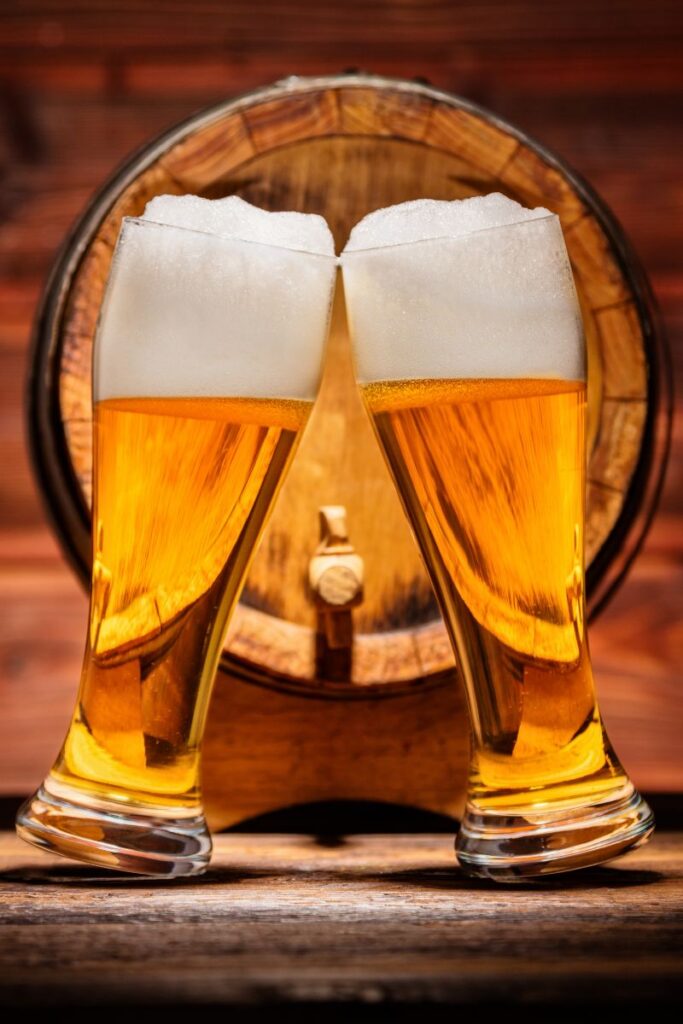
Think about that bar dynamic for a second. The guest who “doesn’t really drink craft” walks in. They see a well-poured, brilliantly clear golden lager on the menu. “What’s that?” they ask. And your bartender says: “It’s a craft lager – crisp, clean, really refreshing. Like if a light beer actually tasted like something.” That guest orders one. And stays.
“The guest who orders a Helles at 4pm is the same guest who’s still at the bar at 8pm. That’s the math.”
That’s a higher check average. More pours. More engagement. More connection between your venue and a guest who’s now actively converted to a better beer experience. The Helles doesn’t just satisfy – it expands your audience.
In Dallas specifically, this isn’t an abstract argument. Dallas is a city of long social occasions – long lunches, extended happy hours, late dinners that turn into nights. The summers are brutal and unforgiving, which means anything you put in someone’s hand at an outdoor table or a patio bar needs to be cold, refreshing, and sessionable. The food culture here – BBQ, tacos, tex-mex, smoked meats, vibrant spice – calls for a beer that complements rather than competes. The Helles is a natural pairing for The Cedars neighborhood’s diverse, community-rooted dining scene and for the broader Dallas food culture that defines the city.
Four Corners Brewing Co. has understood this from day one. Built on the philosophy of vida bien vivida – a life well lived, well shared – their entire brand is oriented around making great beer that belongs at every table, in every neighborhood, for every kind of guest. That’s the same philosophy behind the Helles lager as a style: not a statement beer, but a community beer. One that brings people in and keeps them there.
The consumer demand is real. The cultural moment is right. Now let’s talk about what it means for your bottom line.
Why Your Bar Should Be Pouring a Craft Helles Lager in 2026
1. The Margin Logic Is Real
Bars operate on notoriously thin margins – industry benchmarks from VantaInsights put average bar net margins at roughly 7-12%. Every decision on your tap list is a margin decision. Here’s the Helles equation: a guest who nurses one 8% double IPA over two hours represents a fundamentally different revenue opportunity than a guest who enjoys three Helles lagers over the same period. Sessionable craft beer – priced at a craft premium because it is genuinely craft, but ordered in higher volumes per session – is a margin-positive play. The math is straightforward. More pours equals more revenue.
2. The Craft Gateway Effect
Every smart tap list needs what industry pros call a “craft gateway” beer – the one that converts the light lager drinker without scaring them off. This is the slot that an IPA can’t fill (too intense), a stout can’t fill (too heavy), and even a wheat beer often can’t fill (too foreign-feeling for some). The Helles fills it perfectly. It’s craft approachable – there’s something real to taste – but it doesn’t demand a palate calibration from the guest. According to beer program experts featured in Bar & Restaurant magazine, identifying and filling the gateway slot on a tap list is one of the highest-ROI curation decisions an operator can make.
3. Staff Can Sell It in Three Words
Training bar staff to sell a beer is one of the hidden friction points in any program. Complex styles require complex explanations. A Helles doesn’t. Three words: clean, crisp, refreshing. If a guest asks what it tastes like, your bartender says “It’s a craft lager – bready, smooth, really clean finish. Like the best light lager you’ve ever had, but actually craft.” The sell writes itself. Low training friction means higher confidence at the bar, which means more successful upsells and more engaged service.
4. It Pairs With Your Entire Menu
This is the argument that matters most for restaurants. A beer that pairs with your whole menu – not just one section of it – is worth its weight in kegs. The Helles lager, with its malt-forward softness and clean finish, works with:
- Tacos and tex-mex – cuts through richness, complements spice without fighting it
- BBQ and smoked meats – the gentle malt sweetness bridges the smokiness beautifully
- Fried food – the carbonation and dry finish act as a palate cleanser
- Seafood – light enough not to overpower delicate flavors
- Spicy dishes – low bitterness means it doesn’t amplify heat
- Pizza, sandwiches, salads – genuinely versatile across casual dining
No other beer style on a typical tap list covers this much menu ground with this little resistance.
5. Keg Flexibility for Any Venue
Operationally, Chingón Especial is available in both 1/2 BBL and 1/6 BBL kegs – which means it’s accessible for high-volume venues and intimate taprooms alike. You’re not being forced into a volume commitment that doesn’t match your operation. The flexibility to start with a 1/6 BBL, build the guest relationship, and scale up as demand grows is exactly the kind of low-risk program addition that makes sense in 2026’s careful bar environment.
6. Trend Alignment as a Competitive Signal
Here’s something operators underestimate: your tap list sends a message. It tells guests what kind of operation you are, how current your thinking is, and whether you’re paying attention to what they actually want. Putting a well-made craft lager on tap in 2026 – especially one from a credible, community-rooted Dallas brewery – signals that your program is forward-thinking. You’re not riding a wave that peaked five years ago. You’re meeting guests where they are right now. And in a competitive Dallas market where the best breweries are constantly raising the bar, that signal matters.
Your guests already know what they want. Dáselo.
Chingón Especial: Four Corners Brewing’s Craft Lager Built for Right Now
Everything we’ve talked about – the trend, the style, the business case, the consumer behavior – leads here. To a specific beer, from a specific brewery, built on a specific set of values that align perfectly with this moment.
Chingón Especial is Four Corners Brewing Co.’s answer to the craft lager moment. Not a trend-chasing pivot. Not a rushed response to market data. A beer that delivers on the same values that have defined this brewery since it opened its doors in Dallas’s Cedars neighborhood in 2012: quality ingredients, genuine craft, and beer that belongs to the community that drinks it.
Here are the specs:
- ABV: 4.0%
- IBU: 6.6
- Style: Deluxe lager
- Character: Light hop character, crisp and clean finish
- Tagline: Proudly brewed with the finest ingredients by even finer people.
At 4.0% ABV, Chingón Especial sits even lower than the traditional Helles range – making it one of the most genuinely sessionable craft lagers available in Texas. The 6.6 IBU reflects an almost whisper-soft hop presence, letting the malt character and clean lager finish do all the talking. This beer isn’t trying to be anything other than exactly what it is: a deluxe, Texas-made craft lager that drinks effortlessly and rewards with every sip.
“Brewed in Texas. Born Chingón.”
That’s not just a tagline. It’s a statement of identity. Four Corners Brewing Co. is a Latino-owned, Dallas-original brewery that has spent over a decade building a brand rooted in community, cultural pride, and the simple conviction that great beer should be for everyone. When they put those values into a craft lager, you get a beer that isn’t just technically accomplished – it carries a story. It carries vida.
Connect the dots between what we established earlier about the Helles style and what Chingón Especial delivers: low ABV that’s sessionable by design. Soft, restrained bitterness that invites rather than challenges. A clean, dry finish that keeps you coming back. Malt-forward character that satisfies without overwhelming. This is the Helles lager philosophy, brewed in Texas, with Four Corners’ unmistakable personality woven through every can and every keg.
For enthusiasts, Chingón Especial is available at the taproom alongside other Four Corners favorites. Use the Brew Finder to locate it at a retailer near you.
For bar buyers and operators, kegs are available in 1/2 BBL and 1/6 BBL formats – ready to go on tap wherever you’re ready to put it. And when you pour Chingón Especial, you’re not just adding a craft lager to your program. You’re supporting a local, independent, culturally rooted Dallas brewery that has spent thirteen years earning its place in this city. That’s a story your guests can feel good about, and one your bartenders can tell with genuine pride.
Vida Well Crafted. Poured for right now.
The Renaissance Is Here - ¿Estás Listo?
Here’s what this all adds up to.
The lager renaissance is not a prediction. It’s not a trend report to bookmark and revisit. It’s happening right now – in taprooms, on tap lists, in coolers, and in the hands of drinkers who’ve decided they want something different. Something that’s easy to drink and hard to forget. Something that rewards them with quality rather than challenging them with complexity.
The helles lager is the style at the center of it. Born in Munich in 1894. Refined over 130-plus years of Bavarian brewing mastery. And now – finally, deservedly – getting its moment in the American craft beer spotlight. A beer that’s malt-forward and hop-restrained. Brilliantly clear and silky smooth. Approachable without being boring. Sessionable without being watered down. Everything it needs to be, and nothing it doesn’t.
If you’re a craft beer enthusiast, you now have the full picture: what a helles beer is, what it tastes like, and how it stands apart from the pilsners and light lagers you might compare it to. The next time you’re at the bar and you see a craft lager on the menu, you’ll know exactly what you’re reaching for – and why.
If you’re a bar owner, restaurant operator, or beverage buyer, you have the trend data, the style context, the margin logic, the food pairing case, and a Dallas-made craft lager ready to go on your program today. The question isn’t whether your guests want a sessionable craft lager. They do. The question is whether you’re going to be the venue that gives it to them.
And at the heart of all of it – the beer, the style, the moment, the community – is a philosophy that Four Corners Brewing Co. has been living since 2012. Vida Well Crafted. Good beer, made right, for everyone. Not just for the beer geek with the tasting notebook. For the table full of friends on a Friday. For the solo guest who just wants something cold and honest. For the neighborhood, the city, the culture.
Every great session deserves a great beer. This is it.
¡Salud – and pour the lager!
What’s Your Next Move?
For Craft Beer Enthusiasts
Try Chingón Especial: Visit the Chingón Especial product page to learn everything about Four Corners’ craft lager.
Find it near you: Use the Brew Finder to locate Chingón Especial at a store close to home – it’s closer than you think.
Come taste it fresh on draft: Visit us at the Four Corners Taproom – 1311 S. Ervay St., Dallas, TX and experience it the way it was meant to be poured.
Explore the full lineup: See all of our year-round brews – from the sessionable Helles end of the spectrum all the way to the bold, hoppy side. ¡Órale, vamos!
For Bar Buyers & Operators
Let’s talk kegs: Ready to add a craft lager to your program? Contact Four Corners Brewing Co. to discuss wholesale, distribution, and getting Chingón Especial on your tap list.
Review your keg options: Chingón Especial is available in 1/2 BBL and 1/6 BBL kegs – flexible enough for any venue size, from neighborhood bars to high-volume restaurant programs.
Find distribution in your area: Use the Brew Finder to connect with local distribution and get the conversation started.
The renaissance is here. Your guests are ready. ¿Y tú?